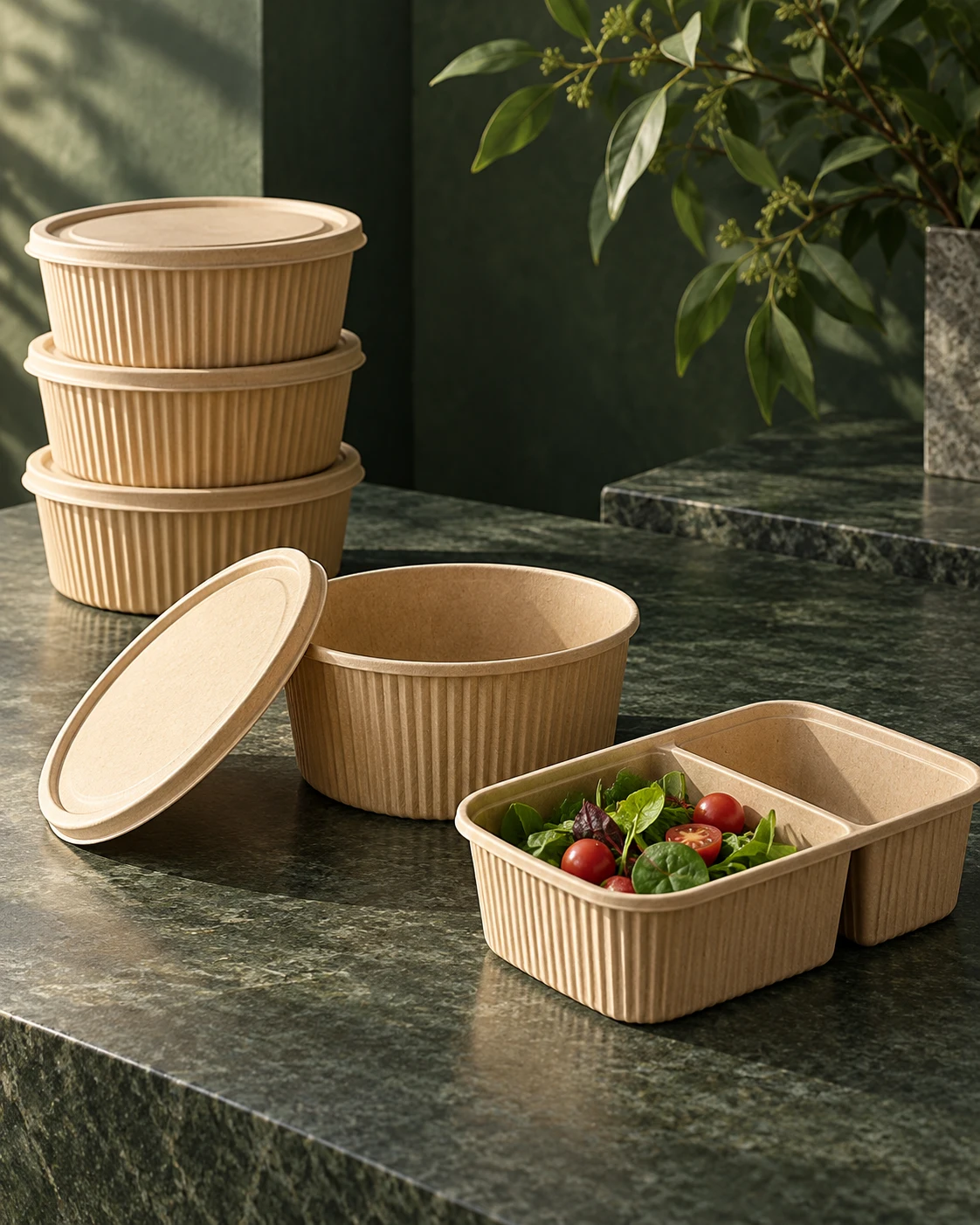
“Bamboo powder” is not a complete food-container specification. It does not explain every component in the finished item, how the container should be used or what happens after disposal. Buyers need a qualification file for the exact product. The following checklist helps organize that work and identify questions for your own technical or compliance team.
1. Identify the whole product
Record the item code, dimensions, weight, container format and lid combination. Request the complete material composition, including binders, additives, coatings and colourants where used. Ask separately about the lid: it may have a different composition from the base. Ensure the offered item and the sample can be traced to the same specification.
2. Write down the intended use
Describe the foods, contact duration, temperatures and handling conditions you need to evaluate. Consider filling, storage, transport and how the customer will use the container. Treat microwave use, freezing, hot filling or other special conditions as separate requirements to be supported. Do not infer these capabilities from a material name or a supplier’s general product range.
3. Check the scope of supporting reports
Request the relevant reports for your destination market and intended conditions. Read the product description, material identification, sample dates and test scope. Resolve differences between the report and the item being offered. A report for a different formulation, colour, lid or product configuration may leave important questions unanswered. Your qualified reviewer should decide whether the evidence is sufficient for the intended sale.
4. Evaluate the assembled sample
Run a practical trial through your actual workflow. Check filling, closure, stacking, handling and transport with the proposed base and lid together. Record the conditions, observations and acceptance criteria. A successful handling trial is useful evidence for that task, but it does not replace the documentation needed for food contact or support unrelated performance claims.
5. Separate environmental claims from material content
Terms such as plastic-free, biodegradable and compostable make different statements. Bamboo content alone supports none of them. Ask which claim is proposed, what evidence applies to the finished item and which disposal conditions are required. Review the lid and any coating as well as the base. Keep unverified environmental wording off product pages and packaging artwork.
6. Plan for traceability and change
Agree batch identification, specification revision and how changes to materials, suppliers or design will be communicated. Keep the approved sample, reports, artwork and order record together. Establish who must approve a change before a revised product is supplied. Recheck the evidence when the specification changes instead of relying on the original file indefinitely.
RONGJIA handles this line through a sourcing and qualification enquiry. Send your product format, destination and intended use, along with any required reports, so the proposed supply can be reviewed against a concrete brief.