Choose the panel around the finished product
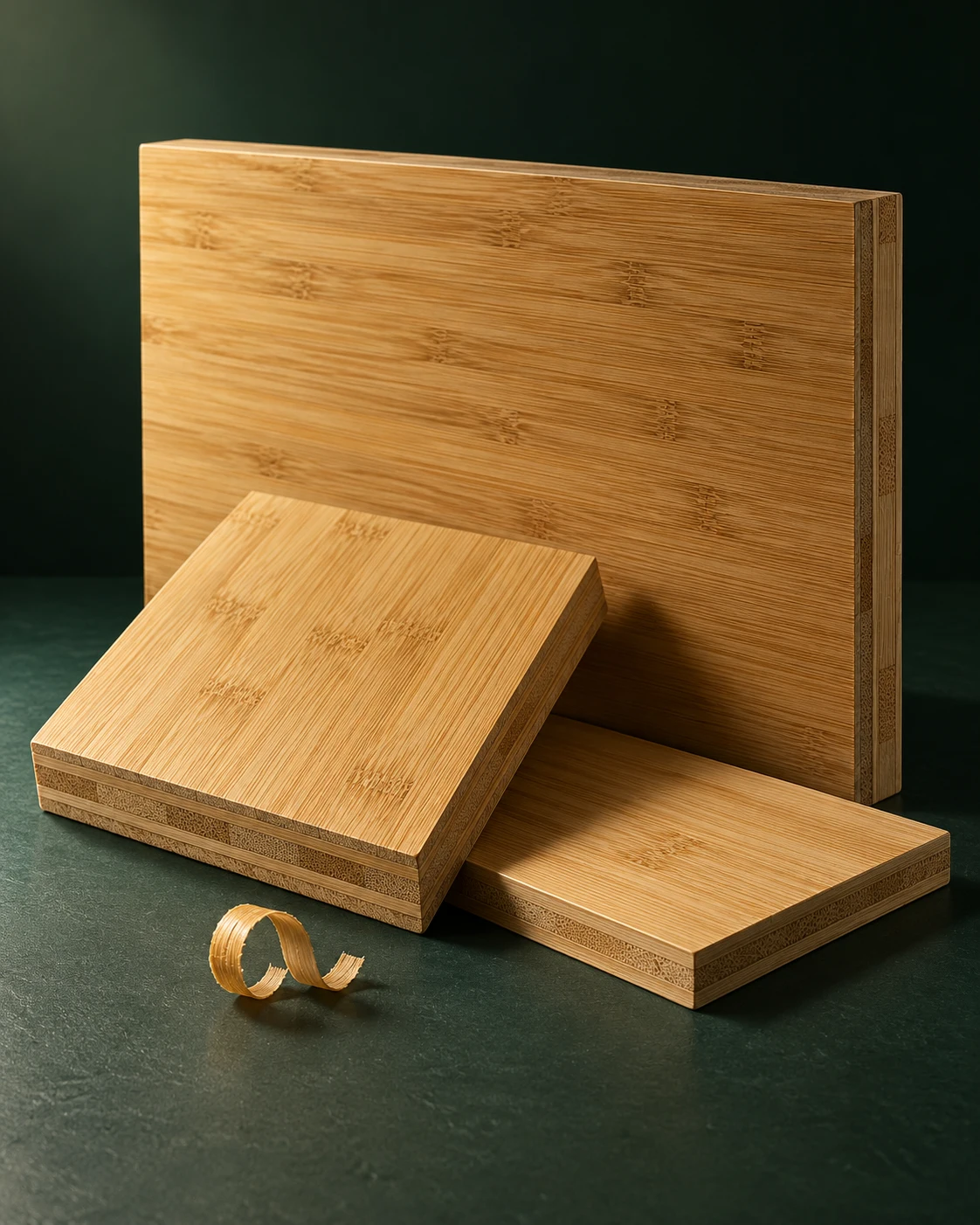
Two bamboo panels can look similar in a photograph and behave differently in fabrication. Layer arrangement, grain direction, thickness and surface preparation all affect the result. We start with the job the panel needs to do: become a visible interior surface, a furniture component, a shelf or a part that will be cut and assembled elsewhere.
RONGJIA supports buyers developing bamboo panel specifications for further manufacturing and project supply. Share the drawing, intended use and finishing process so that the material discussion stays connected to the finished product.
Look beyond the top surface
- Construction. Record the layer arrangement and orientation, including which faces and edges remain visible.
- Dimensions. Specify finished size, thickness and the measurement method for the tolerances you need.
- Appearance. Agree a colour range and physical references for grain, joints, natural marks and any repaired areas.
- Processing. Identify cut-outs, drilling, edge profiles and the sequence of sanding or coating.
Use the sample to check the next production step
A small swatch can establish colour, while a larger sample is more useful for checking the overall pattern and exposed edge. If your team will machine or coat the material, test those operations on a representative sample before approving a bulk order. Review the finish in the lighting where it will be judged, and record the coating system when a finished panel is required.
Any adhesive, emission, strength or other performance requirement should be stated with the applicable test and destination market. Supporting documents need to match the proposed product and construction.
Make the specification easy to repeat
Keep the approved construction, finish reference and packing requirements together. Our customization process helps turn those decisions into a brief that can be checked at sampling and production review.
Discuss a bamboo panel project with a drawing, required quantity and details of your downstream process. If you are still comparing options, tell us which decisions you need the sample to resolve.