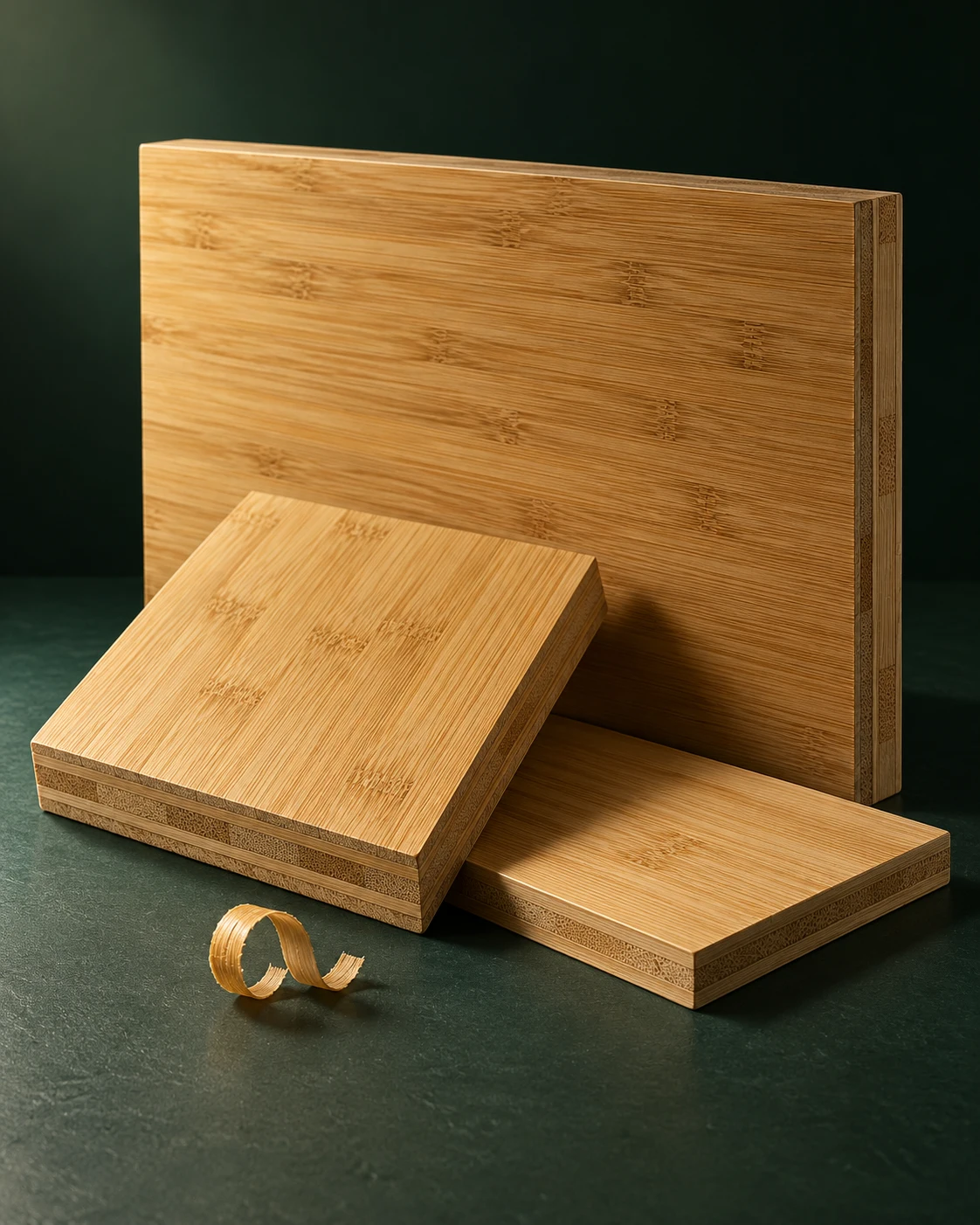
A bamboo panel should be selected as part of the product or space it will become. Colour is often the first thing a buyer sees, but the construction, exposed edges and next manufacturing steps can be equally important. A useful comparison starts with the application and works toward the final surface.
Start with the application
Explain whether the panel will become furniture, shelving, an interior surface or a machined component. Identify the faces and edges that remain visible. Include the main dimensions and any design or performance requirements. A supplier can then review a panel against a defined job instead of proposing a material from a photograph alone.
Compare construction with the edge exposed
Ask for the layer arrangement and grain orientation, supported by a drawing or representative edge sample. Check that the sample corresponds to the construction being quoted. If the product range includes different thicknesses, confirm whether the arrangement stays the same. A visually similar face does not establish that two panels share the same internal structure.
Agree appearance as a range
Use physical samples to review colour and grain. Larger samples reveal pattern and joints that a small swatch may miss. Discuss natural marks and the treatment of visible repairs or colour differences. Keep the accepted references together so the approval records a realistic range, not just the most attractive part of one sample.
Check your next manufacturing step
If the panel will be cut, routed, drilled or coated, run a trial with a representative sample. Review the edges, tool paths and visible faces after the operation. Record any preparation required before your finish is applied. This practical trial can reveal questions that are difficult to resolve from material descriptions, especially where the finished product has detailed machining.
Specify the finished surface
For a finished panel, identify the coating system and the visual reference used for approval. Review colour, sheen, texture and edges under consistent lighting. For an unfinished panel, define the agreed sanding or preparation condition. Do not assume that a finish shown in a lifestyle image is part of the supplied specification.
Match documents to the proposed product
Any adhesive, emission, strength or other technical requirement should name the relevant test or customer specification and destination market. Review whether the supporting document identifies the proposed panel, construction and conditions. A general company document or a report for another product should not be used to fill a gap in the approval file.
- Intended application and visible faces.
- Construction, size and measurement method.
- Approved appearance and surface references.
- Machining trial and required test documents.
- Packing that protects the approved surface.
Use the enquiry fields on our bamboo panels page to organize your brief. Share a drawing and your finishing process so the sample can answer the right questions before production.